

What’s Actually Living in Your Air Ducts (And Why It Matters if You Have Allergies or Asthma)
Most people think about air quality as an outdoor problem — pollen counts, exhaust, humidity. What they don’t think about is the system in their own home that’s been circulating air through the same unclean pathways for years.
If you’re managing allergies or asthma and you’ve never had your air ducts cleaned, there’s a good chance you’re breathing the same accumulated debris on a loop every time your HVAC runs. Here’s what that actually looks like — and why it matters.
The Accumulation Nobody Sees
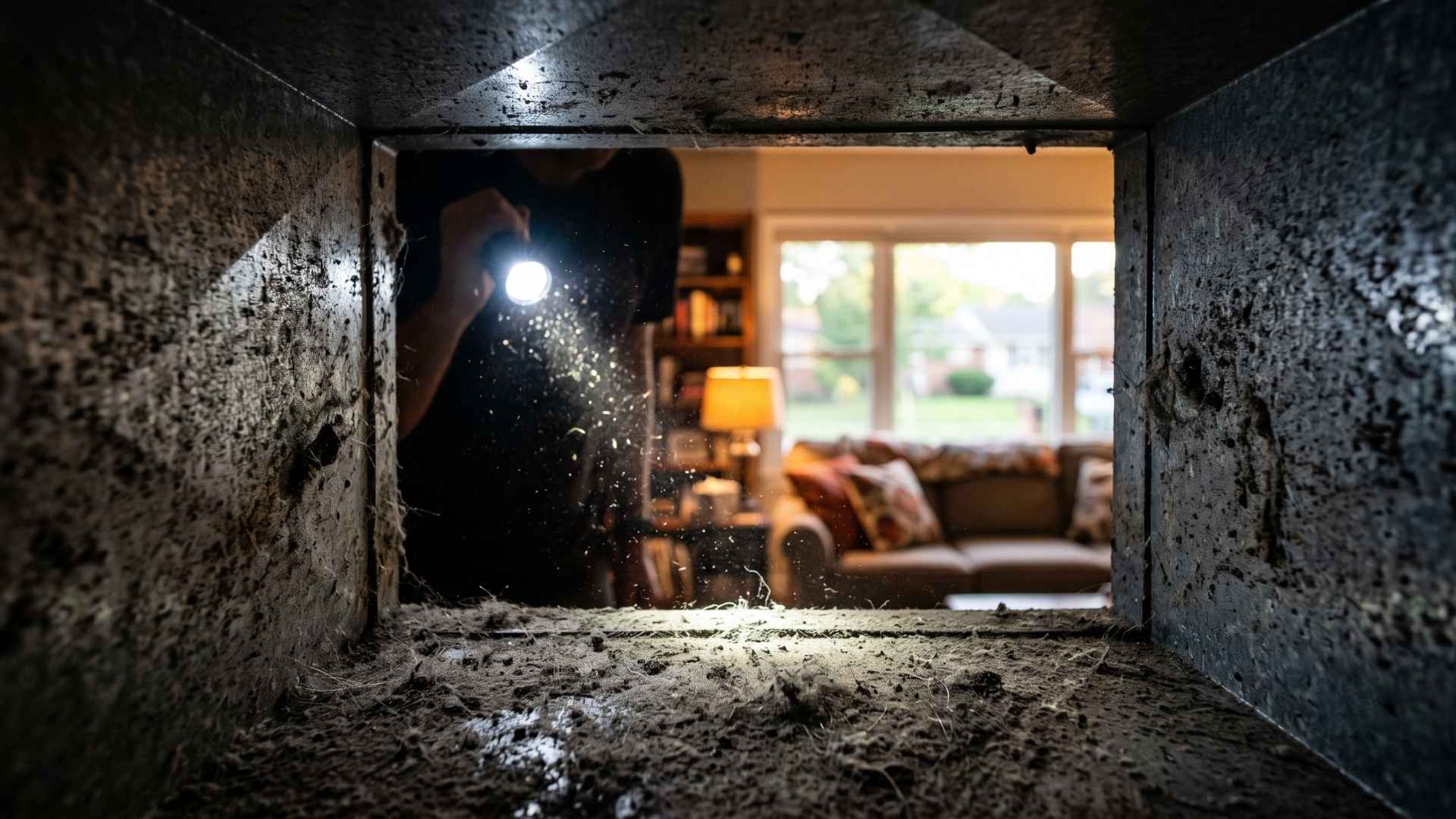
Your duct system is essentially a network of enclosed tunnels that air travels through on its way to every room in your home. What enters the system through your intake, through gaps, through every return vent in the house — accumulates on the interior surfaces of those ducts over time.
In a typical Middle Tennessee home that hasn’t been cleaned in three to five years, that accumulation includes:
- Dust and fine particulate matter. This is the baseline — it’s in every home. In an uncleaned duct system, the settled layer inside supply runs can be significant, and it gets disturbed and recirculated with every air cycle.
- Pet dander. If you have pets, or the previous occupants did, dander from fur and skin is one of the most persistent indoor allergens. It’s microscopic, it settles into duct surfaces, and it stays active as an allergen for months — long after the pet is gone.
- Dead skin cells. Every person in a home sheds dead skin constantly. Much of it ends up in the air and eventually in the duct system. Dead skin is the primary food source for dust mites, which are among the most common household allergen triggers.
- Dead insects and insect fragments. Insects enter HVAC systems through outdoor intake vents and openings in older ductwork. Over time, their remains accumulate and decompose inside the system. Insect fragments are a documented allergen source, particularly cockroach-related material in older homes.
- Mold spores. In any home that’s had humidity issues, minor water intrusion, or just years of condensation in the HVAC system, mold spores can be present in the ductwork and circulated through the home with every air cycle.
- Pollen. During high-season months in Middle Tennessee, pollen enters through HVAC intake systems and deposits on duct surfaces. The system effectively becomes a seasonal allergen reservoir.
Why This Matters Specifically for Allergies and Asthma
None of the above causes allergies or asthma. But all of it makes existing conditions harder to manage.
Allergens and asthma triggers work by cumulative exposure. Your immune system or airways respond to the total load of what they’re encountering. If your bedroom air is delivering a continuous low-level dose of dust mite debris, pet dander, and mold spores from a duct system that hasn’t been cleaned in four years — you’re fighting the condition with the exposure dial turned up higher than it needs to be.
💡 Real Customer Scenario
We’ve had customers call because their allergy symptoms are consistently worse at home than anywhere else. They’ve replaced filters, vacuumed regularly, done everything right — and still felt like the house wasn’t cooperating. In those cases, the inside of the duct system is often the last piece that hasn’t been addressed. One caller recently had asthma and the house had gone five years without a duct cleaning. That’s not a coincidence — it’s a system that’s been redistributing what it’s accumulated.
What Duct Cleaning Actually Does
A professional duct cleaning using NADCA standards and commercial-grade equipment removes the accumulated debris from the interior surfaces of your entire duct system — supply ducts, return ducts, registers, grilles, and HVAC components.
It doesn’t cure anything. It removes a significant, ongoing source of allergen exposure from your home’s air distribution system.
For households with members managing respiratory conditions, that’s a meaningful intervention — not a guarantee, but a genuine reduction in the daily trigger load those airways are dealing with.
Signs Your Ducts May Need Attention
Watch for these warning signs
- Filters clogging more quickly than the rating suggests
- Dust settling visibly and quickly after you clean surfaces
- Allergy or asthma symptoms consistently worse at home than in other environments
- Musty or stale odor from supply vents when the system runs
- It’s been more than three to five years since the last cleaning
- You’ve moved into a previously owned home and don’t know the history
Free Inspection · No Obligation
Find Out What’s Actually Inside Your Ducts
A free duct inspection takes about an hour and tells you exactly what’s inside your system — no guessing, no assumptions. If there’s a problem, you’ll know the extent and receive an itemized quote before committing to anything.
Serving Manchester, Tullahoma, Murfreesboro, Shelbyville, Franklin, Brentwood, Hendersonville & surrounding areas.
NADCA Certified · Locally Owned · Middle Tennessee